The Chinese language, one of the world’s oldest, has a fascinating history that dates back over 4,500 years. Its origins lie in pictographic characters, where simple pictures were combined to convey complex ideas. This method of communication evolved organically, reflecting the culture and beliefs of ancient Chinese society. However, it is one of the few ancient writing system that has survived continuously from ancient times to the present, to preserve for posterity the Good News of God. Here is some evidence to support this claim:
- Cultural Persistence: The use of Chinese characters has been preserved through continuous cultural traditions, literature, and administrative usage. Dynastic changes, invasions, and political upheavals did not interrupt the use of Chinese writing.
- Historical Continuity: Chinese characters have been in use for over 3,000 years. The earliest known Chinese writing are the oracle bone script. This script evolved into various forms, such as the seal script, clerical script, and eventually the modern script.
- Linguistic Evolution: While the spoken Chinese language has evolved significantly over millennia, the written script has maintained a remarkable continuity. Many ancient Chinese texts, such as Confucian classics and early historical records, are still readable by scholars today, with relatively minor modifications in script.
Ancient Chinese writing began with pictographic characters, which were stylized representations of objects or concepts. These early forms evolved into more abstract characters over time. Here are some examples of ancient Chinese pictographs and their meanings:
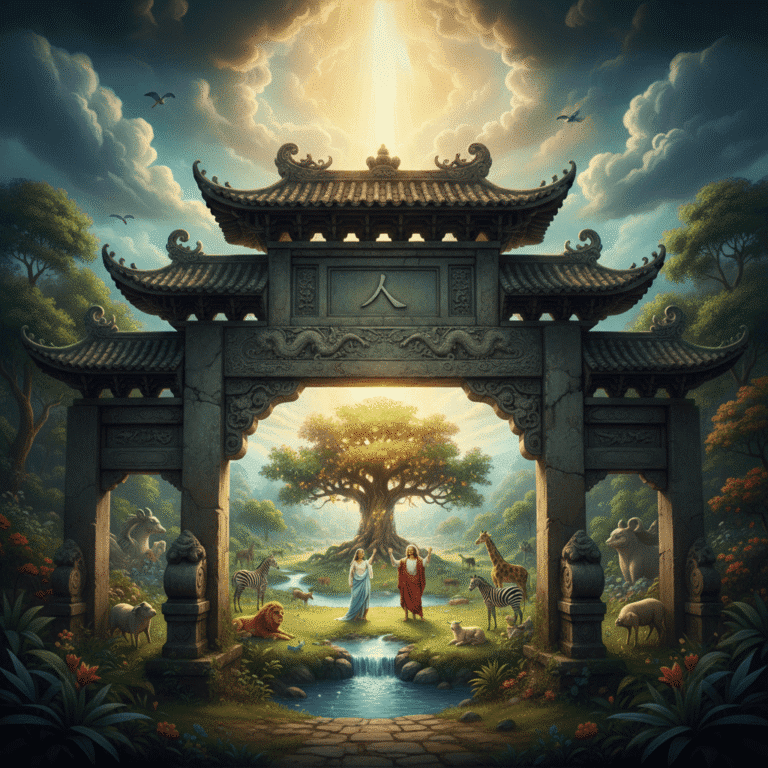
- 人 (rén): This character represents a person. In its ancient form, it resembled a stick figure, depicting a person with arms and legs.
- 日 (rì): Originally depicted as a circle with a dot inside, representing the sun. It symbolizes the concept of the sun or day.
- 口 (kǒu): Represents a mouth. In ancient times, it was a simple depiction of an open mouth.
- 山 (shān): Represents a mountain. In its early form, it resembled a series of peaks, symbolizing a mountain range.
- 木 (mù): Represents a tree. In ancient script, it often resembled a simplified tree shape.
- 水 (shuǐ): Represents water. Originally, it depicted waves or flowing water.
- 火 (huǒ): Represents fire. In its earliest form, it resembled flames or a fire burning.
- 牛 (niú): Represents a cow or ox. In ancient times, it was a stylized depiction of the head and horns of an ox.
These examples illustrate how ancient Chinese characters often originated as pictographic representations of tangible objects or natural phenomena. Over time, these pictographs became more stylized and abstract, leading to the development of a complex writing system that still retains traces of its pictographic origins today.
It’s an interesting perspective to consider how different cultures and civilizations recorded their histories and religious beliefs. Careful scrutiny helps find common themes and patterns that evidence that God inspired the ancients, even the Chinese to record early Bible history or the history of all people (who all share common early ancestors).
Here are a few points to consider:
- The Ancient Chinese Characters: Long before the introduction of Buddhism in China around 50 B.C., ancient Chinese people worshipped a deity known as Shang Di, often associated with the God described in the Bible. This historical connection is evidenced through the study of ancient Chinese characters, some of which depict concepts and narratives similar to those found in early biblical stories.
- Shared Stories and Cultural Roots: Contrary to the belief that the Bible is solely a Western creation, its narratives, including those from Genesis, resonate with ancient Chinese cultural memory. Stories like the creation of Adam, Eve, and the forbidden fruit are mirrored in ancient Chinese characters and cultural practices. For instance, the character for righteousness is a combination of a lamb above me, or sacrificed for me (“sacrificial lamb that became an atonement for me makes me righteous”).
- Divine Intervention and Linguistic Evolution: The biblical account of the Tower of Babel, where languages were divided and people dispersed across the earth, aligns with ancient Chinese characters depicting migration and division. The story of Noah’s Ark, which saved humanity from a great flood, also finds reflection in ancient Chinese characters symbolizing a large ship and eight people.
- Building Faith and Understanding: Understanding these parallels helps build faith in the Bible as a universal text, relevant across cultures and languages. It underscores the historical continuity and deep cultural roots that connect humanity’s shared narratives, demonstrating how ancient Chinese characters can tell not just stories, but universal truths about human history and spirituality.
By exploring the intersections between ancient Chinese characters and biblical narratives, we gain a deeper appreciation for the universality of human experiences and beliefs. The study of these linguistic and cultural connections enriches our understanding of both Chinese history and biblical texts, bridging cultural divides and fostering a broader appreciation for the diversity of human heritage.
If you’re interested in exploring how Chinese characters recorded Biblical history and the Gospel, please watch the videos below. It is a fascinating topic of study, with lots of evidence clearly presented. These presentations aims to foster a foundation of understanding and faith among Chinese speakers, encouraging the reading of the Bible in their native language and recognizing its profound impact on global history and spirituality. Many ancient Chinese characters have symbolic meanings that relate to the early Genesis tale, which includes the creation, fall, sin and death’s beginning, the promise of the powerful Redeemer and His great sacrifice, the great flood, and the tower of Babel. The one and only real Saviour for all of humanity is Jesus Christ. The Bible is the genuine word of salvation for people everywhere, including China, the country with the largest population on earth. It is not merely a book written by Westerners.
About the Author

Welcome to Voices of Asia!
Subscribe to email postings of free articles.
Get news and exclusive promotions in your inbox too.
欢迎来到亚洲之声!
订阅电子邮件,免费获取精选文章。
您还可以在收件箱中收到最新资讯和独家优惠信息。
If you'd like to support this work financially, you can upgrade your membership to a higher tier and gain access to even more exclusive content. If interested, read more here:https://voanews.xyz/en/subscription-donation/
如果您希望为这项工作提供经济支持,您可以选择升级会员等级,以获取更多独家内容。 感兴趣的话,欢迎联络我们了解详情 :VoicesOfAsia333@gmail.com




 English
  Chinese