The ancient and modern Qiang people became widely known to those in Mainland China and elsewhere after the Sichuan/Wenchuan earthquake in 2008. Their cultural practices are very similar to those of Israel, and according to archaeological records, they migrated from the West to where they are! 2008年四川/汶川地震后,古代与现代的羌族人开始为中国大陆及其他地区所广泛知晓。他们的文化习俗与以色列极为相似,考古记录显示他们正是从西方迁徙至此!
A short but informative documentary made by Taipei Unity Church (台北合一基督教會), which was released during the Chinese Spring Festival during the Year of the Sheep, spotlights one of the most ancient Chinese ancestors of Chinese people, the Ancient Qiang ethnic minority. The Ancient Qiang people are the ancestors of the Han (the world’s largest single ethnic group in terms of numbers), Tibetan, Yi, Qiang, and Xixia peoples. Mainly found in East Asia, the Han Chinese are also found in other parts of the world, such as Southeast Asia. With a total population of over 1.3 billion, the Han Chinese account for about 18% of the world’s population. (Note 1) 台北合一基督教会制作的这部简短而富有教育意义的纪录片,于羊年春节期间发布,聚焦了中国最古老的民族之一——古羌族。古羌族是汉族(全球人数最多的单一民族)、藏族、彝族、羌族和西夏族的共同祖先。 汉族主要分布于东亚地区,亦散居东南亚等世界其他区域。其总人口逾13亿,约占全球人口的18%。(注1)
Interestingly, the Ancient Qiang uses the sheep as a sacrificial symbol and draws parallels to Judeo-Christian theology centered around the Lamb of God. The short film aims not only to celebrate the Chinese New Year but also to provoke contemplation on the cultural and spiritual connections between Christian beliefs and Chinese traditions. 有趣的是,古代羌族将绵羊作为祭祀象征,其意象与犹太-基督教神学中”上帝羔羊”的核心概念形成呼应。这部短片不仅旨在庆祝中国新年,更旨在引发人们对基督教信仰与中华传统之间文化与精神纽带的深思。
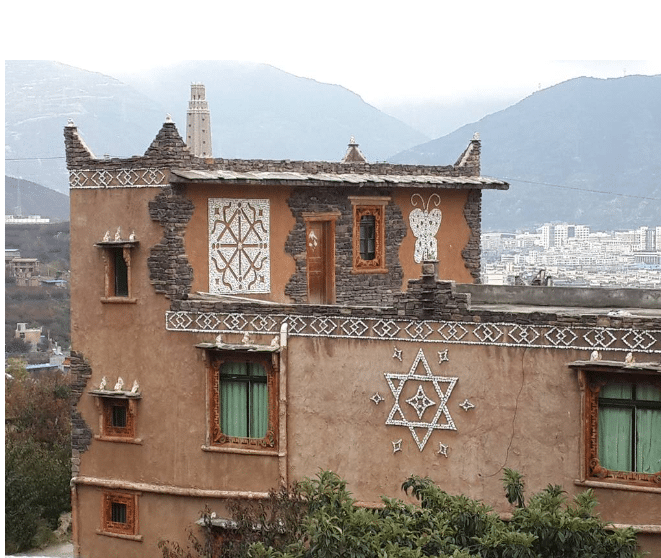
The Qiang people, with their preference for white stones in architecture, show striking similarities to Jewish heritage. The Chinese character “羌” consists of “羊” (sheep) above “ㄦ”, symbolizing “Christ’s lamb”, suggesting ancient biblical influences possibly brought to China by the Qiang people, who were nomadic tribes in ancient China. 羌族人在建筑中偏爱白色石材,其文化特质与犹太传统存在惊人相似之处。汉字”羌”由”羊”字与”ㄦ”字组合而成,象征”基督的羔羊”,暗示羌族——这支古代中国的游牧部落——可能将远古圣经文化带入了中国。
The documentary highlights amazing religious and cultural similarities between the ancient/modern Qiang people and the ancient Israelites: (Note 2) 该纪录片突显了古代/现代羌族与古代以色列人之间惊人的宗教与文化相似性:(注2)
1) The Qiang use white stones in their religious practices, akin to the Jewish use of “white stones”. 1) 羌族在宗教仪式中使用白石,类似于犹太人使用“白石”的习俗。
2) Their sacrificial rituals involving sheep and altars resemble biblical sacrificial burnt offerings. 2) 他们以绵羊和祭坛为媒介的献祭仪式,与圣经中的燔祭仪式极为相似。
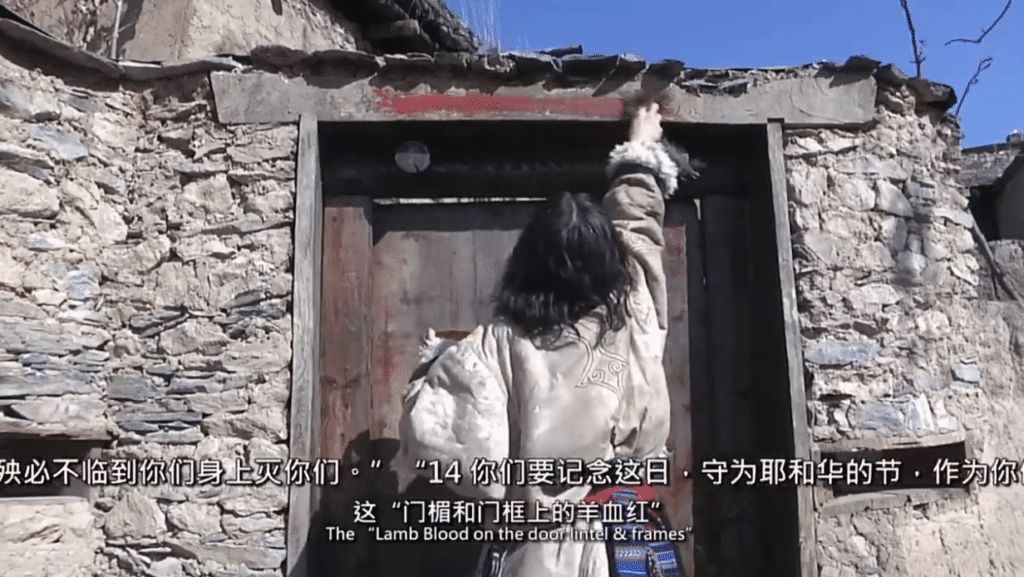
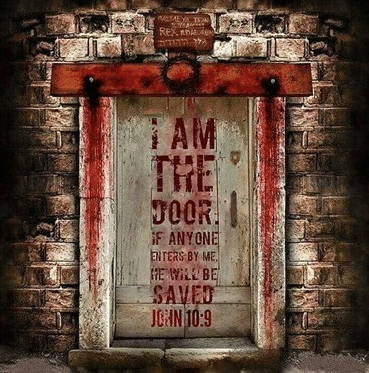
3) Practices like applying sheep’s blood to door frames, to be shielded from evil entering the household/to let the evil pass over (cf. Passover), later evolving into Spring Festival couplets, bear resemblance to Passover traditions. 3) 诸如在门框上涂抹羊血以阻挡邪恶进入家宅/让邪恶越过(参见逾越节)的习俗,后来演变为春节对联,与逾越节传统颇为相似。
4) The retention of ancient Hebrew pronunciation and meanings in ancient and modern Qiang languages, such as “Yahwei”, “Abba”, and “Elohi) reflects connections to the God of Israel and the world. 4) 古代和现代羌语中保留的古代希伯来语发音与含义(如”Yahwei”、”Abba”和”Elohi”),反映了其与以色列神及世界的关联。
5) Their priests, known as “shibi”, wear linen garments and perform rites similar to Jewish rabbis and priests. In worship rituals, they also smear blood on the horns of the worship altar, just like Jewish people. 5) 他们的祭司被称为“shibi”,身着亚麻长袍,执行类似犹太教拉比和祭司的仪式。在敬拜仪式中,他们同样会在祭坛的角上涂抹鲜血,这与犹太人的做法如出一辙。
The producer of the documentary, Pastor Chu PY, also pointed out that the Ancient Qiang, considered ancestors of the Chinese people, preserved aspects of ancient biblical culture after the Noahic flood and Tower of Babel language dispersion when the descendants of Shem migrated eastward to became an Oriental nation. “Sinim” mentioned in Isaiah, is believed by some scholars to be the Chinese. Pastor Chu also postulated that at a later stage, the then present-day “Qiang” people were the migration of the Jewish people, when the northern kingdom of Israel was attacked in 722 BC, by the Assyrian Empire, and 10 of the 12 Israeli tribes were scattered throughout the region, including those who migrated to the east. At the same time, China was in the Spring and Autumn Period, when many vassal states fought and competed for supremacy. He believes that the Qiang people who have many similarities to the Israelites, must be a part of the dispersed people of the northern kingdom of Israel. 纪录片制作人朱牧师还指出,被视为中华民族祖先的古羌族,在诺亚洪水与巴别塔语言分散之后,当闪的后裔向东迁徙成为东方民族时,他们保存了古代圣经文化的某些特征。 《以赛亚书》提及的”西尼姆”,被部分学者认为即指中国。朱牧师进一步推测,后世的”羌族”正是犹太民族的迁徙群体——公元前722年北国以色列遭亚述帝国攻陷时,十二支派中有十支流散至各地,其中部分向东方迁徙。 此时中国正值春秋战国时期,诸侯国纷争角逐霸权。他认为与以色列人存在诸多相似性的羌族,必然是以色列北国流散子民的一部分。
The initiative aims to bring God’s chosen people back to the gospel truth. They seek to awaken the people of Shen Zhou (神州 Divine Land or the Sacred Land) to their ancient faith and heritage, affirming the reality of the scriptures. 该倡议旨在引领上帝拣选的子民回归福音真理。他们致力于唤醒神州(神圣之地)的子民,重拾古老信仰与文化传承,并确认圣经的真实性。观看视频请点击: Watch the video here: https://www.youtube.com/watch?v=SGDtzz8ku00
In another report, a local Qiang sister relayed the tradition of those in their culture: “In our Qiang culture, whenever a house is to be repaired, the family needs to prepare a goat, and the oldest person in the stockaded village will lay his hand on the head of the goat and declare in front of the people that all the bad things of this family are attributed to the goat, and it will be slaughtered. The blood shed from the goat is to be sprinkled on every corner of the house and also painted on the door frames. In the past, I didn’t understand why these rituals were done, especially after I went to school, I thought they were superstitious and not based on science. It was not until I read the Bible that I realized that these rituals in the stockaded village were meant to atone for sins, to cover up sins and to bring peace. The sheep is considered a blessed emblem of the Qiang people. In the past, every family would hang a sheep’s head in their house, but we did not have a god of sheep, nor did we make offerings to sheep. The sheep has always been represented as a sacrificial object.” All these customs are clearly recorded in the book of Leviticus in the Old Testament of the Bible, which is the custom of the Israelites. (Note 3) 另一份报告中,一位当地羌族姐妹讲述了她们文化的传统:”在羌族文化里,每当房屋需要修缮时,家庭必须准备一只山羊。围栏村中最年长者会将手按在山羊头上,当众宣告这个家庭的所有厄运都归咎于山羊,随后将其宰杀。 山羊的血需洒遍房屋每个角落,并涂抹在门框上。过去我不明白为何要举行这些仪式,尤其上学后更觉得这是迷信,毫无科学依据。直到读了《圣经》,我才明白围栏村的这些仪式旨在赎罪、遮盖罪孽并带来平安。 羊被羌族视为神圣象征。从前每家都会悬挂羊头,但我们既无羊神,也不祭祀羊。羊始终是祭品的象征。这些习俗在《圣经》旧约《利未记》中都有明确记载,正是以色列人的传统。(注3
Note 1: 漢族,是大中華地區的主體民族,屬於東亞人種,在世界其他地區亦有分佈,如緬甸果敢族、越南艾族、明鄉人,也屬於漢族的分支。漢族總人口超過13億,佔世界人口約18%,以人數而言,目前是世界第1大單一族群。 (https://zh.wikipedia.org/wiki/%E6%B1%89%E6%97%8F) (Refer to Minahan, James B. Ethnic Groups of North, East, and Central Asia: An Encyclopedia. ABC-CLIO. 2014: 89–95 [2021-08-20]. ISBN 978-1-61069-018-8.) (Note 1: The Han Chinese are the dominant ethnic group in Greater China, belonging to the East Asian race. They are also distributed in other parts of the world, such as the Kokang people of Myanmar, the Ai people of Vietnam, and the Minh Huong people, who are also branches of the Han Chinese. The total Han Chinese population exceeds 1.3 billion, accounting for approximately 18% of the world’s population, making them the world’s largest single ethnic group in terms of numbers.)
Note 2: 找出「羌族」的基督奧秘 「羊」年賀歲片正夯!https://cdn-news.org/News.aspx?EntityID=News&PK=0000000000652e59b6ff4306e88bf541ba0ff87da24beca1
Note 3: 羌族习俗为何与以色列习俗相似? https://www.cclife.org/View/Article/10010
About the Author

Welcome to Voices of Asia!
Subscribe to email postings of free articles.
Get news and exclusive promotions in your inbox too.
欢迎来到亚洲之声!
订阅电子邮件,免费获取精选文章。
您还可以在收件箱中收到最新资讯和独家优惠信息。
If you'd like to support this work financially, you can upgrade your membership to a higher tier and gain access to even more exclusive content. If interested, read more here:https://voanews.xyz/en/subscription-donation/
如果您希望为这项工作提供经济支持,您可以选择升级会员等级,以获取更多独家内容。 感兴趣的话,欢迎联络我们了解详情 :VoicesOfAsia333@gmail.com
 Chinese
  English